FrontierPixel compass logo

Shed dealer websites

40 Qualified Shed Leads in Two Months.

This page is based on documented Shed 210 results from San Antonio, Texas. It shows what a real dealer website and configurator captured during the January-February campaign, not theoretical marketing claims.

40

Qualified shed leads

Generated during the January-February Shed 210 campaign.

$196K+

Quoted opportunities

Conservative quoted pipeline during the January-February campaign.

12.5%

Minimum observed close rate

Five documented purchases out of 40 qualified January-February leads.

The problem

Most shed websites only collect contact forms.

Shed buyers do not shop like generic service leads. They compare footprints, roof styles, wall heights, delivery needs, payment range, and add-ons before they are ready to talk.

A plain contact form hides that buying behavior. The dealer gets a lead, but not the project context that helps a salesperson follow up with confidence.

The solution

A website with a shed configurator that captures qualified buyers before they leave.

The configurator can embed into an existing website. A full rebuild is not required when the current site already works as the dealer's main address.

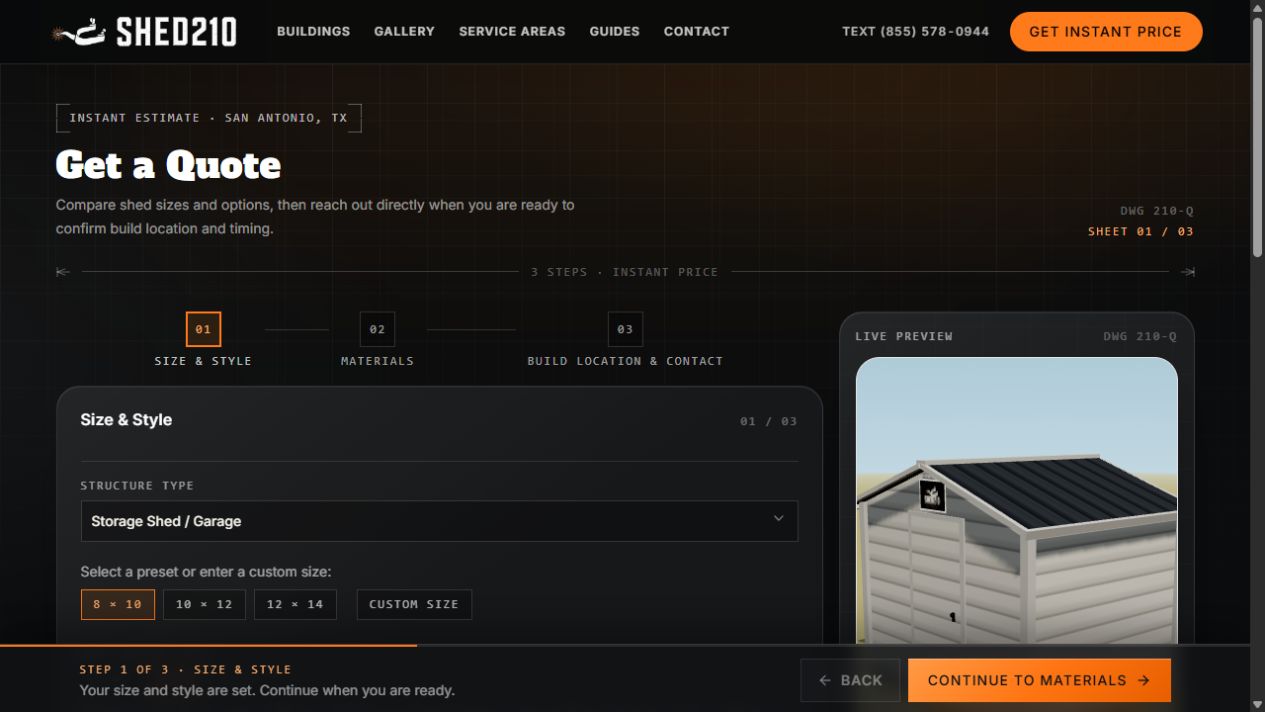
The goal is simple: let buyers build the shed they are considering, then send the dealer a lead with the selected specs attached.

How it works

Three steps from shed shopper to dealer lead.

Step 1

Customer designs their shed

The buyer chooses size, structure type, roof style, wall height, and add-ons before asking for a quote.

Step 2

Customer requests a quote

The request carries the project details a dealer needs for follow-up, not just a name and phone number.

Step 3

Dealer receives the lead

The dealer gets the lead quickly, with the configured shed specs attached.

SMS notification showing a new shed quote request with project details
SMS alert from the Shed 210 quote flow. The dealer receives the configured project details.

What 40 shed shoppers taught us

The useful output was buyer behavior, not just lead count.

These are operational insights from the January-February Shed 210 campaign dataset. They help a dealer understand product demand, follow-up priority, and which projects deserve clearer sales paths.

Multi-configuration shoppers quoted higher

Roughly $1,700 higher

During the January-February campaign, shoppers who explored multiple configurations averaged $6,038 in top quoted value versus $4,289 for single-configuration shoppers.

Add-ons changed project value

Roughly $850 higher

During the January-February campaign, configurations with add-ons averaged $5,008 versus $4,158 without add-ons.

8x12 generated the most demand

35 configurations

In the January-February campaign dataset, 8x12 was the highest-volume shed size and represented more than $107K in configured quote value.

Larger sheds carried the highest value

$176K+ configured value

In the January-February campaign dataset, 10x16 and 12x20 together represented more than $176K in configured quote value.

Ownership

The dealer keeps the digital assets and the customer data.

A dealer website should not trap a shed lot inside someone else's platform. The site, domain, leads, and customer data should stay under the dealer's control.

You own your website.
You own your domain.
You own your leads.
You own your customer data.

No platform lock-in.

No long-term contracts.

Proof

Read the full Shed 210 case study before you start.

The case study documents the January-February campaign window, the deduped lead count, the conservative quoted pipeline, and the confirmed tracked customer purchases.

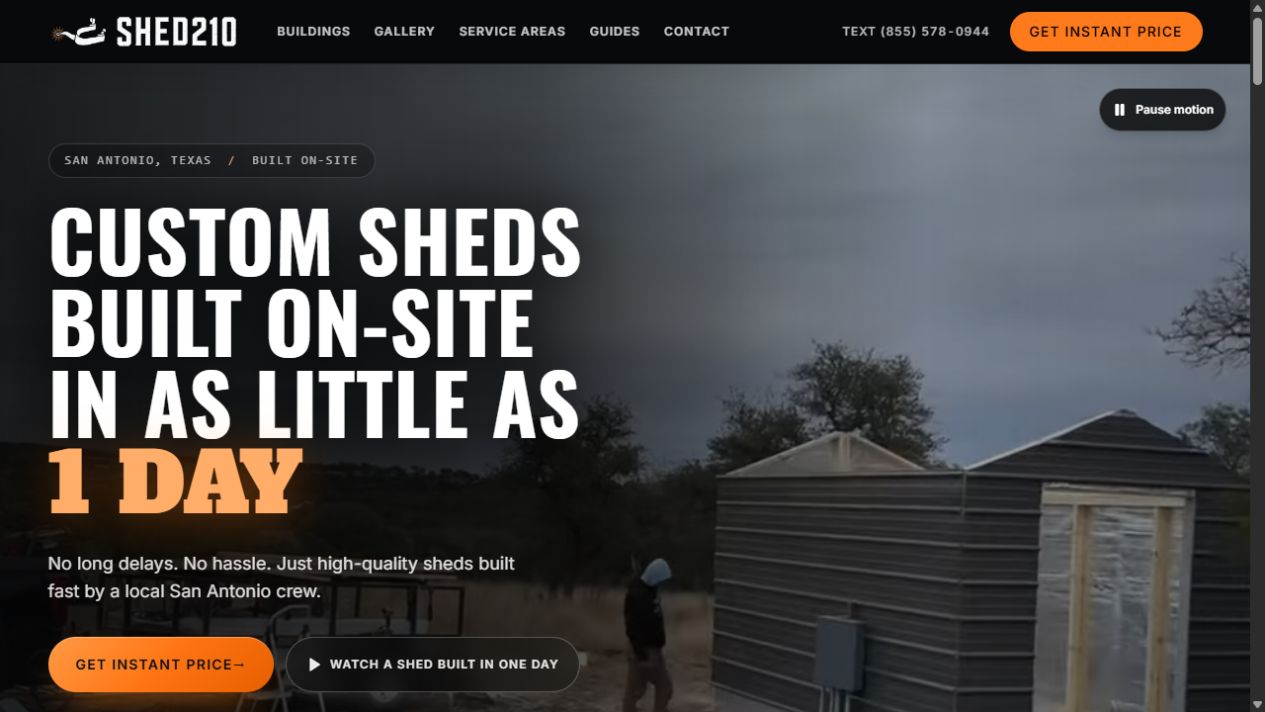
Shed 210 website homepage preview

Quote requests included project details for dealer follow-up.

40 qualified leads were counted during the January-February campaign.